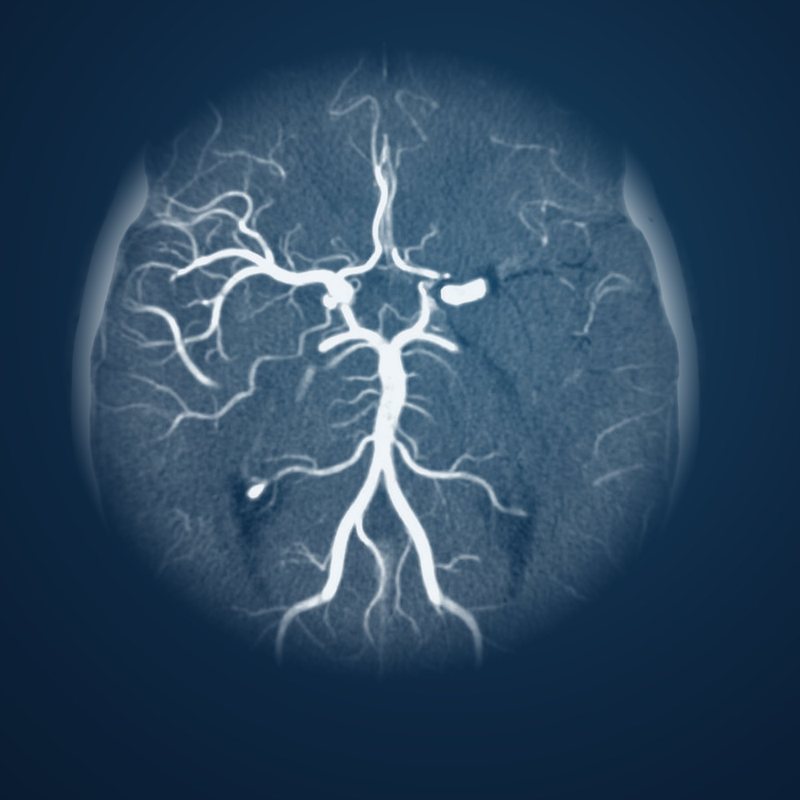
Why the order of the worklist matters
A teleradiology worklist is never just one study. On a busy night it can hold ED CTs, trauma X-rays, inpatient follow-ups and studies that were ordered hours earlier. If everything is read strictly in the order it arrives, a stroke CT can sit behind routine work at exactly the moment minutes matter most.
That is why the first rule of our worklist is simple: stroke studies are read first, ahead of routine work, the moment they arrive.
What happens with a stroke study
Here is the path a stroke study takes, from order to signed report:
- The order arrives by HL7.We know a stroke study is coming before the images land.
- Images route securely to our PACS.Nothing to install on your side; your techs send the study the way they already do.
- The study goes to the top of the list.Stroke studies are read first, ahead of routine work.
- Findings are communicated by phone.A critical finding is called to your ED within 15 minutes, read back and logged.
- A signed final goes into your system.In your format, read in the US by a board-certified radiologist licensed in your state.
Reports follow your format and your critical list, so the radiologist reading at night works to the same rules as your own group.
Critical results: the 15-minute call
A critical result only helps a patient once the right clinician knows about it. A report sitting in the chart is not the same as a conversation. Our standard for every critical finding is a phone call to your ED within 15 minutes, with three things done every time:
- Read-back. The person receiving the result repeats it back, so a misheard side, level or measurement is caught on the call, not the next day.
- Logged with name and role. The log shows who took the call and what their role is, so “I told someone at the desk” never stands in for a real handoff.
- Logged with the time. Every call is time-stamped, so the 15-minute standard can be checked, not just claimed.
What counts as critical is defined by your hospital’s own critical results list. Lists commonly include findings such as intracranial hemorrhage, a large vessel occlusion, a tension pneumothorax, free air in the abdomen or an aortic dissection, but the list that matters is yours, and the radiologist works to it.
Every critical call is on your monthly scorecard, call by call, not just an average.
Documentation your committees can use
ED directors, stroke coordinators and quality committees are often asked to show how imaging results reach clinicians. Good documentation turns that from a search through emails into a report you already have:
- The critical call log: name, role and time for every call, with read-back.
- The 7 AM handoff note: what we read overnight and what we called, waiting for your day group.
- The monthly scorecard: turnaround, criticals and peer review, every month.
None of this asks your staff to keep a separate log. The radiologist documents the call as it happens, and the summary comes to you. Because every report is a signed final, the record in the chart is complete. For the difference that makes, see preliminary vs final radiology reads.
Trauma and the busy ED night
Emergency volume does not arrive evenly. A single trauma can bring several studies at once, a head CT, a cervical spine CT, a chest and abdomen CT and a run of X-rays, and it tends to happen when the department is already busy. Each of those studies still needs a signed final, and any critical finding among them still needs a call. Two things keep reads moving on those nights. A named backup reader, already credentialed at your hospital, is on every night, so coverage never depends on one person. And your ED physicians have one number answered by a person when they need to reach us.
ED coverage is available inside any block: overnight, evenings, weekends and holidays, daytime overflow or 24/7. Small and rural EDs can read about coverage for critical access hospitals. See every option on services.
Questions
Do you read stroke studies first?
Yes. Stroke studies go to the top of the worklist ahead of routine work as soon as they arrive.
How quickly are critical results called to the ED?
Within 15 minutes. Each critical result is phoned to your ED, read back, and logged with the name, role and time of the person who took the call.
What is read-back and why does it matter?
The person receiving a critical result repeats it back to the radiologist. It catches misheard details on the call itself, which is why we do it on every critical result.
Are emergency reads preliminary or final?
Final. Every report is a signed final by a board-certified radiologist licensed in your state, read in the US.
Can we see how critical calls performed each month?
Yes. Every call is on your monthly scorecard, and the critical call log records name, role and time for every call.